Embracing the Potential of Platform Economics
In an era where digital technology is the catalyst of change and progress, the concept of Platform Economics is becoming increasingly relevant. Today, the business ecosystem is witnessing a major shift in the way enterprises operate and create value. Businesses that have embraced this new economic model are thriving, while those that are reluctant to adapt are facing the risk of becoming obsolete.
Platform Economics is a business model that leverages digital technology to create a network of users and resources that interact with each other. Unlike traditional linear businesses that create value by manufacturing products or providing services, platforms create value by building networks and enabling interactions.
Take the example of companies like Uber or Airbnb. These companies do not own the resources they trade on; instead, they provide a platform where service providers and consumers can interact, transact and create value. This concept of extracting value from an array of connections is the very essence of Platform Economics.
The Value of Connections and Interactions
The value in Platform Economics arises from the connections the platform fosters. These connections could be between people, between businesses, or even between different technologies. As more users join the platform, the value of these connections increases, creating what is known as a network effect: the more the merrier.
For instance, a social media platform becomes more valuable as more users join and participate. The value here is derived from the interconnections between users and the content they share, not from the platform itself.
For businesses, platforms provide an opportunity to leverage these network effects. By integrating their products or services into a platform, they can reach a wider audience and generate more value.
Challenges and Opportunities in Platform Economics
While the benefits of Platform Economics are clear, navigating this new business model isn’t without its challenges. Platform businesses must constantly innovate to stay relevant, keep their user base engaged and attract new users.
One major challenge is the balance between control and openness. Too much control can stifle innovation, while too much openness can lead to chaos and instability. Striking the right balance is crucial for the platform’s sustained success.
However, despite these challenges, the opportunities are immense. With the proliferation of digital technologies and the increasing interconnection of people, businesses, and devices, the potential for value creation is enormous.
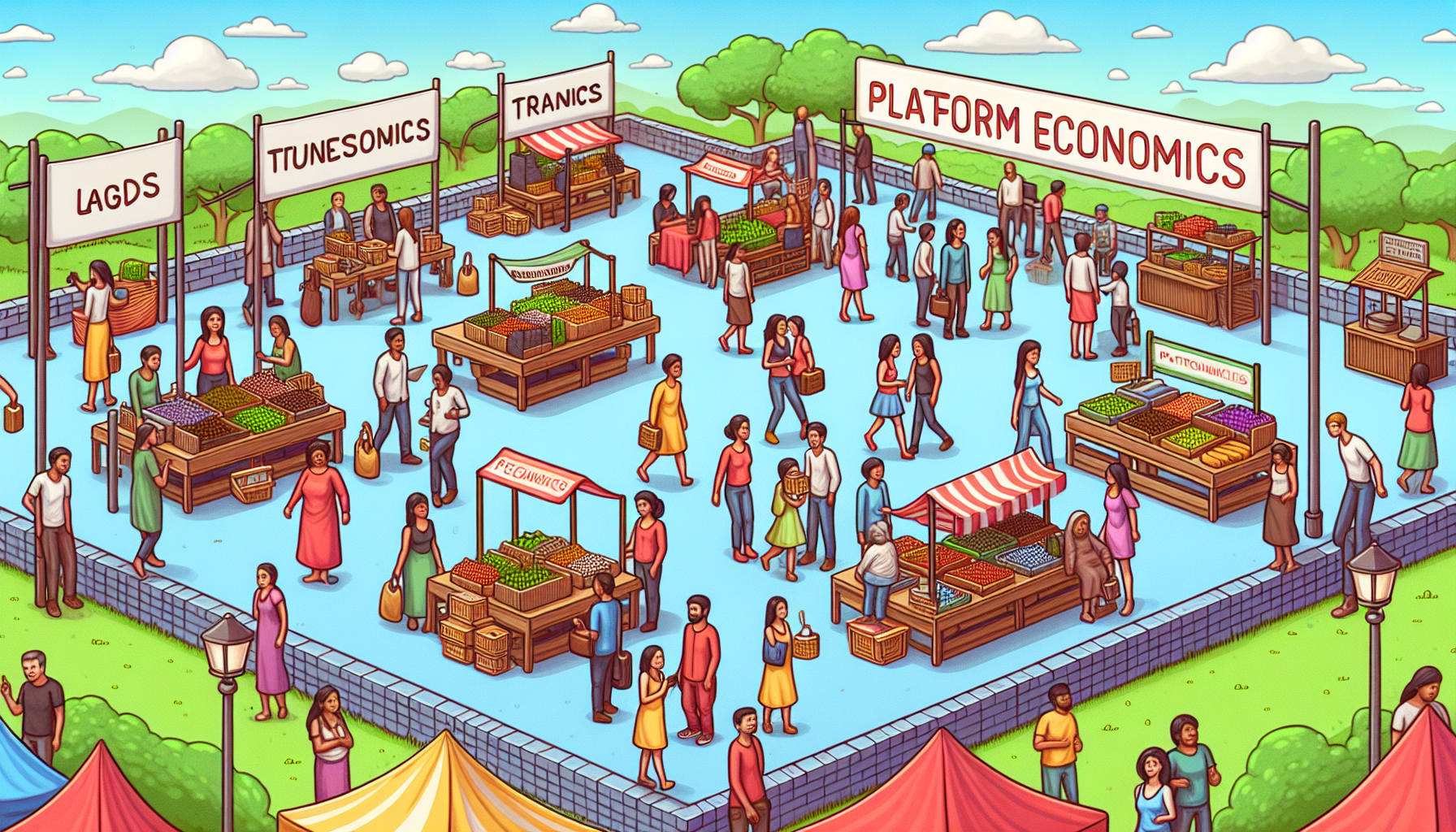
To leverage these opportunities, businesses must rethink their strategies.
Instead of focusing solely on products or services, they must consider how they can create and manage networks of users and resources.
They must think about how they can facilitate interactions and transactions within these networks to generate value.
Moreover, they need to embrace openness and collaboration. By creating an open platform, businesses can encourage innovation and co-creation, fostering a vibrant and dynamic ecosystem that drives growth and prosperity for all parties involved.
The potential of Platform Economics is vast and still largely untapped.
As the digital landscape continues to evolve, businesses that embrace this new economic model will be well-positioned to thrive and succeed.
Remember, the future isn’t about owning resources; it’s about connecting them.